


















No Deposit Electricity in Texas (2026)
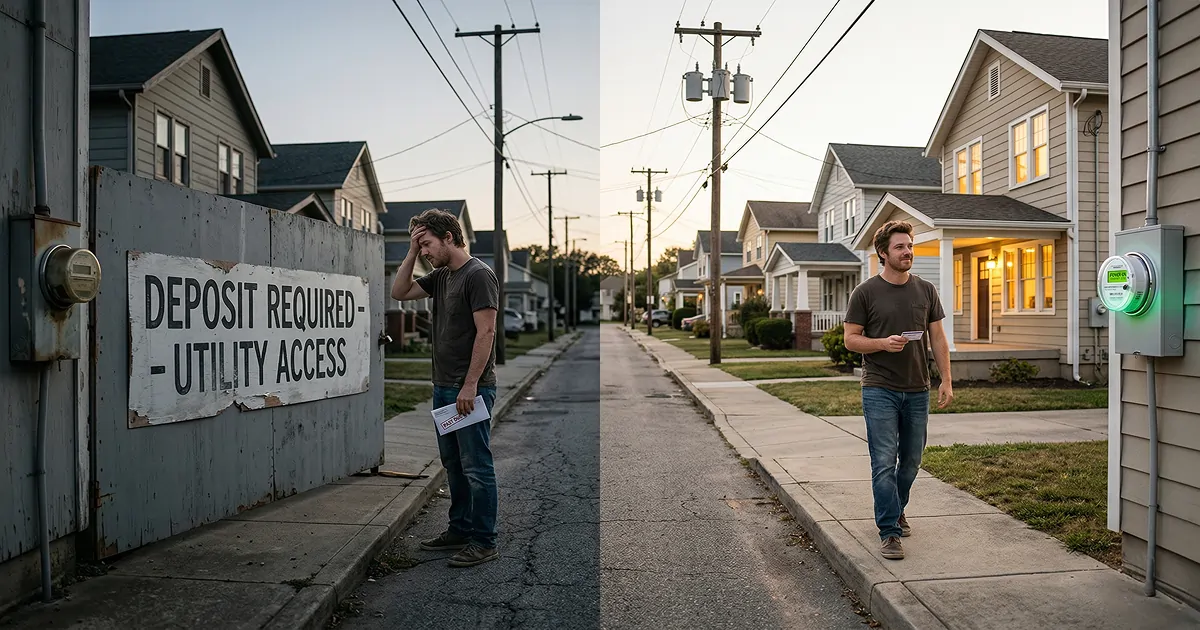
Moving to Texas or switching providers and worried about a hefty deposit? You’re not alone. Hundreds of thousands of Texans search for no-deposit electricity every year — and the good news is that Texas’s deregulated electricity market gives you more options to avoid deposits than almost any other state.
This guide covers every path to getting electricity without an upfront deposit, from prepaid plans to providers that run soft credit checks, so you can get the lights on without draining your bank account.
Why Do Electricity Companies Require Deposits?
Electricity deposits exist to protect providers against non-payment. Because electricity is consumed before it’s billed (you use power all month, then receive a bill), providers face the risk that a customer will rack up charges and never pay. The deposit acts as a financial buffer.
In Texas, providers use your credit history to determine whether a deposit is required. A strong credit score (typically 650+) usually means no deposit. Below that threshold, you’ll likely be asked for $100 to $400 upfront, depending on the provider and the plan.
4 Ways to Get Electricity Without a Deposit
Prepaid Electricity: The Most Popular No-Deposit Option
Prepaid electricity has grown enormously in Texas over the past several years. It works like a prepaid phone plan: you load money onto your account, and the provider deducts your daily usage. When your balance gets low, you receive an alert and add more funds. If your balance hits zero, service is disconnected — but there’s no debt, no collections, and no penalty.
Pros and Cons of Prepaid Electricity
| Pros | Cons |
|---|---|
| No deposit required | Rates can be higher per kWh than contract plans |
| No credit check | No protection from price spikes (variable rate) |
| No long-term contract or cancellation fee | Disconnection if balance reaches $0 |
| Daily usage visibility helps control consumption | Must actively manage your balance |
| Quick signup — often same-day service | Fewer plan options compared to traditional service |
Who Is Prepaid Electricity Best For?
- Renters and short-term residents who don’t want a contract commitment
- People rebuilding credit who can’t pass a traditional credit check
- Budget-conscious households who want real-time spending visibility
- Anyone who needs same-day electricity and can’t wait for credit processing
No-Deposit Plans vs. Standard Plans: Cost Comparison
One of the biggest concerns with no-deposit electricity is whether you’ll pay more for the convenience. Here’s how the different options typically compare:
| Plan Type | Deposit | Credit Check | Contract | Typical Rate Range |
|---|---|---|---|---|
| Standard fixed-rate (good credit) | $0 | Hard check | 12–36 months | 8–14¢/kWh |
| Standard fixed-rate (with deposit) | $100–$400 | Hard check | 12–36 months | 8–14¢/kWh |
| No-deposit (soft credit check) | $0 | Soft check | Month-to-month or fixed | 10–16¢/kWh |
| Prepaid / Pay-as-you-go | $0 | None | None | 12–18¢/kWh |
The difference in per-kWh cost between a standard plan and a no-deposit plan typically works out to $15–$40 per month for an average Texas household using 1,000 kWh. Compare that to tying up $200–$400 in a deposit for 12 months, and the no-deposit route often makes more financial sense.
How to Sign Up for No-Deposit Electricity in Texas
- Determine your TDU (utility). Your Transmission and Distribution Utility is based on your physical address. Common Texas TDUs include Oncor, CenterPoint, AEP Texas, and TNMP. Your TDU determines which providers serve your area.
- Compare no-deposit plans. Use our Texas rates comparison tool to filter for no-deposit and prepaid plans available at your address.
- Check the Electricity Facts Label (EFL). Every Texas electricity plan comes with a standardized EFL that shows the true cost at 500, 1,000, and 2,000 kWh usage levels. Look at the 1,000 kWh price for the most realistic comparison.
- Gather your information. You’ll need your Social Security number (for non-prepaid plans), your service address, a valid ID, and your ESI-ID (your unique meter identifier — look it up here).
- Enroll online or by phone. Most providers can activate service within 1–3 business days for a standard switch, or same-day for move-ins and prepaid plans.
What Happens to Your Deposit If You Do Pay One?
If you do end up paying a deposit, it’s not gone forever. Texas regulations require providers to refund your deposit (with interest) after 12 consecutive months of on-time payments. The deposit is typically applied as a credit to your bill or refunded via check.
If you switch providers before the 12-month mark, you’re still entitled to a refund of the deposit minus any outstanding balance. The provider must return it within 60 days of your final bill.
Frequently Asked Questions
Can I get electricity in Texas without a Social Security number?
Yes, with prepaid electricity. Prepaid providers typically require only a valid ID and a service address — no SSN and no credit check. For traditional plans, an SSN or ITIN is usually required for the credit check.
Will applying for electricity hurt my credit score?
It depends on the provider. Traditional providers run a hard credit inquiry, which can temporarily lower your score by a few points. Providers offering “no credit check” or “soft check” plans will not affect your credit score at all.
Can I switch from prepaid to a regular plan later?
Absolutely. Many customers start with prepaid electricity while they build or rebuild credit, then switch to a fixed-rate contract plan to lock in lower rates. There’s no penalty for switching since prepaid plans have no contract.
Is no-deposit electricity available outside of Texas?
No-deposit options exist in other deregulated states (Pennsylvania, Ohio, Illinois, etc.), but Texas has the widest selection due to its large number of competing retail electricity providers. In regulated states, you typically must pay whatever deposit the monopoly utility requires.
“Texas has more retail electricity providers than any other deregulated state, which means more competition and more no-deposit options for consumers.”
Tips for Getting the Best No-Deposit Rate
- Compare at 1,000 kWh. The EFL price at 1,000 kWh is the most accurate benchmark for an average Texas home. Ignore the advertised “low” rate and look at the EFL.
- Watch for hidden fees. Some no-deposit plans offset the waived deposit with higher monthly base charges. Check the EFL for recurring fees.
- Consider a short contract. A 3–6 month fixed-rate plan with no deposit can give you rate stability while you shop for a better long-term deal.
- Use a letter of credit. If you had good payment history with a previous provider (even out of state), request a letter of credit. Most Texas providers will waive the deposit with this documentation.
- Check for promotions. Providers frequently offer sign-up incentives like bill credits, free nights, or waived deposits during competitive periods.
Sources
Public Utility Commission of Texas (PUCT) consumer guides, ERCOT market data, Texas Administrative Code §25.478 (deposit rules), provider enrollment data. Last updated March 17, 2026.