

















Texas Electricity Assistance Programs (2026)
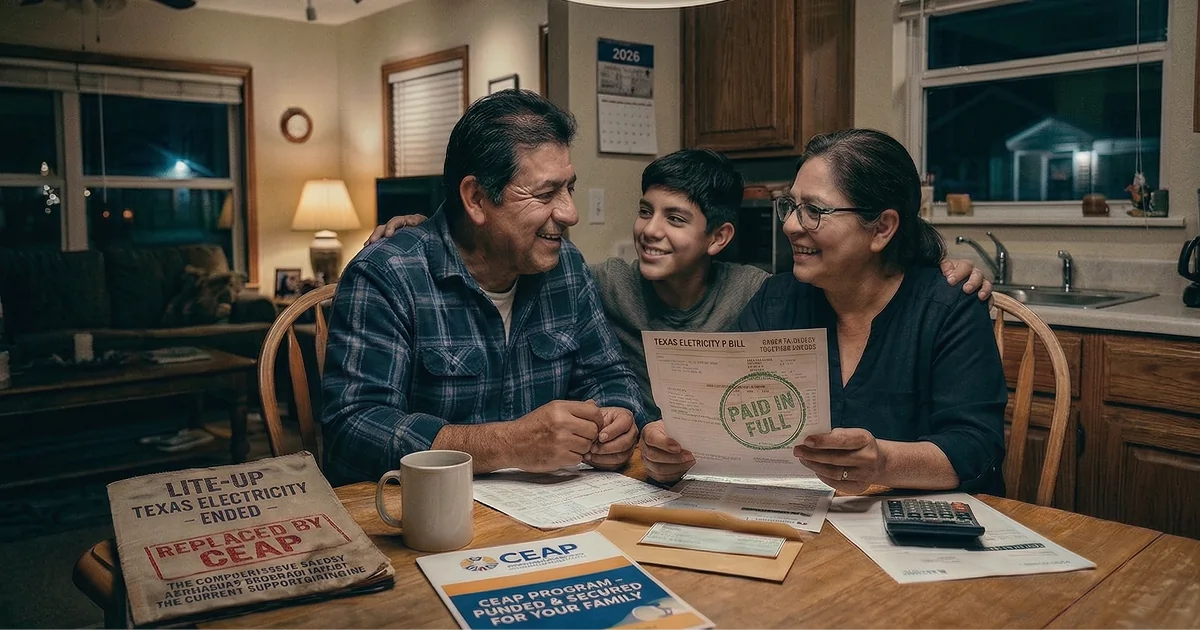
LITE-UP Texas ended in 2016. If you need help paying your electricity bill, here are the programs that are still available to low-income Texans today.
What Happened to LITE-UP Texas?
LITE-UP Texas was a state-funded electricity discount program that helped low-income households in deregulated areas of Texas reduce their monthly electric bills by 10–17%. At its peak, the program served roughly 700,000 households.
The program was funded by the System Benefit Fund, a small surcharge on every electricity bill in deregulated Texas. In 2013, the Texas Legislature eliminated that surcharge, leaving roughly $300 million in the fund to wind down. A 2015 law (House Bill 1101) extended the program through August 2017 to spend the remaining balance, but the fund was depleted ahead of schedule and the last discounts were applied on August 31, 2016.
Since then, no state-level electricity discount program has replaced LITE-UP Texas. However, several federal and state programs still provide meaningful assistance to Texans struggling with energy costs.
Currently Active Electricity Assistance Programs in Texas
1. Comprehensive Energy Assistance Program (CEAP)
CEAP is the primary energy assistance program in Texas, administered by the Texas Department of Housing and Community Affairs (TDHCA) through local community action agencies covering all 254 Texas counties.
What it provides:
- Direct payment toward electricity, natural gas, and propane bills
- Crisis assistance for households facing disconnection or an energy-related emergency
- Repair or replacement of heating and cooling systems
- Energy conservation education and financial counseling
Maximum benefits (2025):
- Heating and cooling assistance: up to $12,300
- Crisis assistance: up to $2,400
- Weatherization: up to $12,000
Eligibility: Household income at or below 150% of the Federal Poverty Level. Priority goes to households with elderly members (60+), disabled persons, or children under 6.
2025 Income Guidelines (150% FPL)
| Household Size | Annual Income Limit |
|---|---|
| 1 person | $23,475 |
| 2 people | $31,725 |
| 3 people | $39,975 |
| 4 people | $48,225 |
| 5 people | $56,475 |
| 6 people | $64,725 |
| 7 people | $72,975 |
| 8 people | $81,225 |
Note: Income guidelines are updated annually based on federal poverty level adjustments.
How to apply:
- Call 2-1-1 or (877) 399-8939 to be connected with your local community action agency.
- Gather required documents: current utility bill, 12-month usage history, proof of income for all household members 18+, Social Security cards (photocopies), and a photo ID.
- Submit your application through your local agency. Assistance is not an entitlement — it's provided based on available funds, so apply early.
2. Low Income Home Energy Assistance Program (LIHEAP)
LIHEAP is the federal program that funds most of Texas's energy assistance, including CEAP. Texas received $174.4 million in LIHEAP funding for fiscal year 2025.
In Texas, LIHEAP funds are distributed through CEAP and the Weatherization Assistance Program. There is no separate LIHEAP application — applying for CEAP accesses LIHEAP-funded benefits automatically.
Contact: Call the National Energy Assistance Referral line at 1-866-674-6327 or visit energyhelp.us.
3. Weatherization Assistance Program (WAP)
WAP provides free home energy efficiency upgrades to qualifying low-income households, helping reduce long-term energy costs. The program is funded by the U.S. Department of Energy and administered by TDHCA.
Eligible improvements include:
- Home energy audits
- Insulation (ceiling, wall, and floor)
- Caulking and weather-stripping
- Duct work repair and sealing
- Repair or replacement of inefficient heating and cooling systems
How to apply: Contact your local community action agency through 2-1-1 or visit the TDHCA WAP page.
4. Provider Hardship Programs
Many Texas electricity providers offer their own assistance programs for customers experiencing financial hardship:
- TXU Energy Aid — bill payment assistance, primarily for summer cooling costs. Contact TXU Energy or call 2-1-1.
- Deferred payment plans — most retail electric providers (REPs) are required to offer deferred payment plans to qualifying customers facing disconnection.
- Bill credits and flexible payment arrangements — contact your provider directly to ask about hardship options.
5. PUCT Consumer Protections
The Public Utility Commission of Texas (PUCT) enforces several protections for vulnerable customers:
- Critical care / chronic condition protections — customers with qualifying medical conditions can receive disconnection protections. A physician must contact the retail electric provider with documentation.
- Family violence protections — deposit waivers for victims of domestic violence with certification from an authorized entity.
- Extreme weather moratoriums — disconnections may be suspended during extreme heat or cold events.
Program Comparison
| Program | What It Provides | How to Apply |
|---|---|---|
| CEAP | Direct bill payment, crisis assistance, system repair | tdhca.texas.gov or call 2-1-1 |
| LIHEAP (via CEAP) | Federally funded energy bill assistance | energyhelp.us or call 1-866-674-6327 |
| WAP | Free home weatherization upgrades | tdhca.texas.gov or call 2-1-1 |
| TXU Energy Aid | Cooling/heating bill payment assistance | Call 2-1-1 or contact TXU directly |
| PUCT Protections | Disconnection protections, deposit waivers | puc.texas.gov |
Tips to Lower Your Electricity Bill in Texas
In addition to assistance programs, Texas customers in deregulated areas can take proactive steps:
- Shop for a lower electricity rate. Texas's competitive market means you can compare electricity rates and switch providers at any time — often saving significantly.
- Switch to a fixed-rate plan to lock in a predictable monthly cost, especially during summer when variable rates spike.
- Use a smart thermostat to reduce cooling costs by 10–23% without sacrificing comfort.
- Seal air leaks around doors and windows — one of the cheapest and most effective ways to reduce heating and cooling waste.
- Take advantage of free energy audits offered by many Texas utilities and providers.
Related Articles
- Texas Electricity Rates
- No Deposit Electricity Service in Texas
- How to Sign Up for New Electricity Service
- What Is Electricity Deregulation?
- Are You Paying Too Much in Delivery Charges?
Sources
- Texas Department of Housing and Community Affairs — tdhca.texas.gov
- CEAP Program — tdhca.texas.gov/comprehensive-energy-assistance-program-ceap
- Weatherization Assistance Program — tdhca.texas.gov/weatherization-assistance-program
- LIHEAP Clearinghouse: Texas Profile — liheapch.acf.hhs.gov
- Public Utility Commission of Texas — puc.texas.gov
- Texas Tribune — "Texas Stops Helping Poor Families Pay Their Electric Bills" (Sept 2016)
- Utility Dive — "Texas low-income ratepayer assist program ends after funds run out" (2016)
- Texas Health and Human Services (2-1-1) — 211texas.org