50 Surprising Facts on Energy Consumption
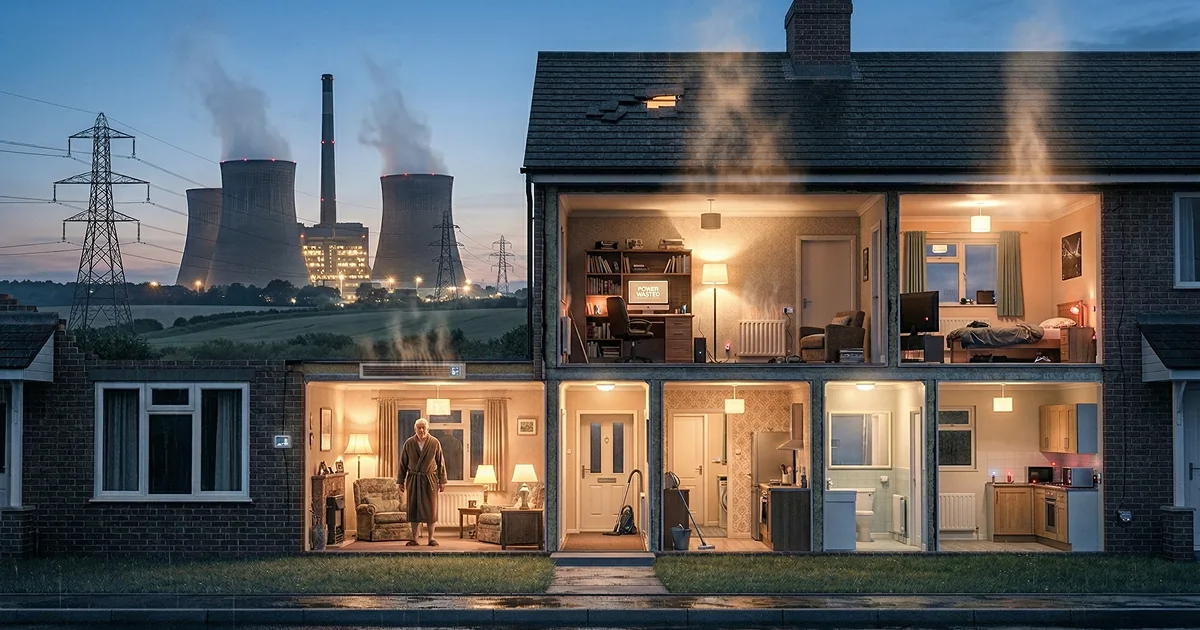
From tiny phone chargers to massive data centers, energy consumption shapes every corner of modern life. Here are 50 facts that might change the way you think about electricity.
80+Quadrillion BTU consumed by the U.S. annually
10,500 kWhAverage annual U.S. household usage
40%Share of U.S. electricity from natural gas
21%U.S. electricity from renewables (2025)
Household Energy Facts (1–10)
- The average U.S. household uses about 10,500 kWh per year — roughly 886 kWh per month, though this varies widely by state and climate.
- Heating and cooling account for nearly half of home energy use. The HVAC system is by far the largest single energy consumer in most American homes.
- A single refrigerator runs 24/7 and uses 400–800 kWh per year — more electricity than most people realize, especially older models manufactured before 2000.
- Standby power ("vampire loads") cost U.S. households an estimated $19 billion per year. Devices like TVs, game consoles, and chargers draw power even when turned off.
- LED bulbs use 75% less energy than incandescent bulbs and last up to 25 times longer, saving the average home roughly $225 per year on electricity.
- Water heaters are the second-largest energy expense in most homes, accounting for about 18% of a household's total energy bill.
- The average American home has 20–40 devices plugged in at any given time, from smart speakers to phone chargers, each contributing to baseline consumption.
- A clothes dryer uses more electricity per cycle than a dishwasher uses per week. Air-drying clothes can save up to $200 per year.
- Smart thermostats can reduce heating and cooling costs by 10–23%, paying for themselves within a single year in most climates.
- Ceiling fans use roughly 1% of the energy an air conditioner uses, yet can make a room feel 4–6°F cooler through wind chill.
U.S. Energy Production Facts (11–20)
- The United States is the world's largest producer of oil and natural gas, surpassing Saudi Arabia and Russia in combined output since 2018.
- Natural gas generates roughly 40% of U.S. electricity, making it the single largest source of power generation in the country.
- Texas produces more electricity than any other state — and more wind power than most countries, generating over 40,000 MW of wind capacity.
- Solar energy capacity in the U.S. has grown over 7,500% since 2010, from about 2.5 GW to over 190 GW of installed capacity.
- Nuclear power provides roughly 19% of U.S. electricity from 96 operating reactors at 57 commercial plants across 28 states.
- Coal's share of U.S. electricity fell from 45% in 2010 to 16% in 2026, replaced primarily by natural gas and renewables.
- Wind turbines now generate enough electricity to power over 43 million American homes, with capacity continuing to grow each year.
- The U.S. electric grid spans over 12,500 power plants and 160,000 miles of high-voltage transmission lines — one of the largest machines ever built.
- Hydropower is the oldest renewable source of electricity in the U.S., generating about 6% of total power, primarily from dams in the Pacific Northwest.
- The Hoover Dam generates enough electricity to serve 1.3 million people in Nevada, Arizona, and California.
Global Energy Facts (21–30)
- Global electricity consumption has more than tripled since 1980, driven by population growth, urbanization, and the digital revolution.
- China consumes more electricity than any other country — roughly 8,500 TWh per year, nearly twice the United States' consumption.
- Iceland generates nearly 100% of its electricity from renewable sources (geothermal and hydropower), making it the cleanest grid in the world.
- An estimated 730 million people worldwide still lack access to electricity, concentrated primarily in Sub-Saharan Africa and parts of South Asia.
- Denmark generates over 55% of its electricity from wind power, the highest share of any nation, and aims for 100% renewable energy by 2030.
- The world's largest power plant is the Three Gorges Dam in China, with a capacity of 22,500 MW — equivalent to roughly 15 nuclear reactors.
- Global energy demand is projected to increase 25–30% by 2040, driven largely by developing economies in Asia and Africa.
- Data centers worldwide consume about 1.5–2% of global electricity, a figure that surged 17% in 2025 alone driven by AI, cloud computing, and streaming.
- Electric vehicles could account for 10% of global electricity demand by 2040 if adoption continues at current growth rates.
- The average European uses about half the electricity of the average American, due to smaller homes, milder climates, and more energy-efficient appliances.
Technology & Appliance Facts (31–40)
- Charging a smartphone costs about $1–$2 per year in electricity — one of the cheapest devices to operate, despite constant use.
- A single Google search uses roughly 0.3 Wh of energy, enough to power a 60W light bulb for about 18 seconds.
- Streaming one hour of video uses about 36–72 Wh of energy when you factor in data centers, network infrastructure, and the display device.
- Electric ovens use 2,000–5,000 watts per hour, making them among the most power-hungry appliances in a typical kitchen.
- A pool pump can cost $50–$150 per month to operate, making it one of the most overlooked energy expenses for homeowners.
- The first commercial power plant opened in 1882 on Pearl Street in Manhattan, built by Thomas Edison to serve 85 customers with 400 lamps.
- Modern washing machines use about 75% less energy than models from the 1970s, thanks to Energy Star standards and improved motor technology.
- A plasma TV uses 3–4 times more electricity than an LED TV of the same size, which is why plasma screens were phased out of production.
- Induction cooktops are roughly 90% energy-efficient, compared to about 40% for gas burners and 70% for traditional electric coils.
- Bitcoin mining consumes more electricity than many entire countries, including Argentina, the Netherlands, and the Philippines.
Industry & Commercial Facts (41–50)
- Industrial sector energy consumption accounts for about 33% of total U.S. energy use, led by chemical manufacturing, petroleum refining, and metals production.
- Commercial buildings waste up to 30% of the energy they consume, primarily through inefficient HVAC systems, lighting, and poor insulation.
- Walmart uses more electricity than some small countries, consuming over 7 billion kWh per year across its global operations.
- The Empire State Building's energy retrofit reduced its consumption by 38%, saving $4.4 million per year and becoming a model for commercial efficiency.
- Server farms in the U.S. use more electricity than the entire country of Hungary, and demand is growing 10–15% annually with AI workloads.
- Manufacturing one car requires roughly 30,000 kWh of energy — enough to power an average American home for nearly three years.
- Grocery stores are among the most energy-intensive commercial buildings due to refrigeration systems that run continuously around the clock.
- The U.S. loses 5–6% of generated electricity during transmission and distribution, amounting to billions of dollars in wasted energy annually.
- Energy-efficient upgrades in commercial buildings typically pay for themselves in 2–5 years through lower utility bills and reduced maintenance costs.
- If every American home replaced one incandescent bulb with an LED, it would save enough energy to light 3 million homes for a year.
Related Articles
- How Much Electricity Does the Average Home Use?
- What Are Peak Demand Charges?
- Are You Paying Too Much in Delivery Charges?
- Green Apps to Track Your Energy Usage
- Worst Power Outages in U.S. History
Sources
- U.S. Energy Information Administration — eia.gov
- International Energy Agency — iea.org
- Department of Energy — energy.gov
- Energy Star — energystar.gov