Hurricane Polo Remnants Hit Texas: Power Outages, Flooding & What We Learned
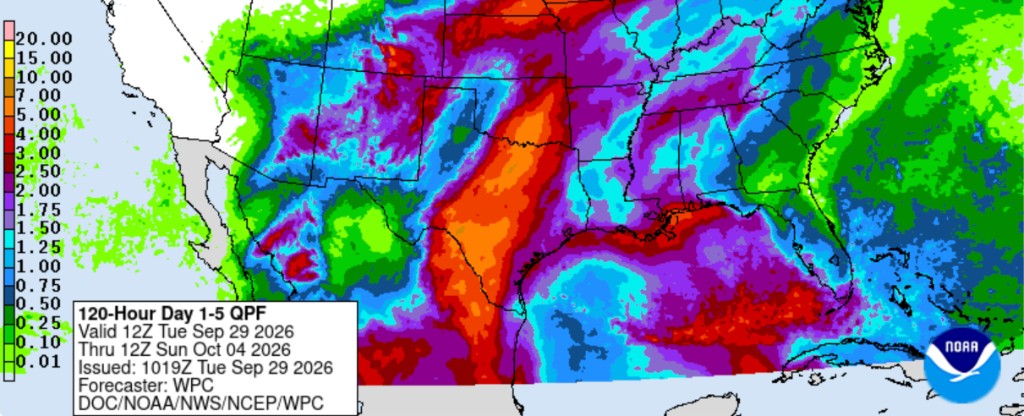
The remnants of Hurricane Polo battered Texas for an entire week — from Monday, September 28 through Saturday, October 3 — producing widespread flash flooding, thousands of power outages, hundreds of flight cancellations, dam releases on the Colorado River, sewer overflows in Fort Worth, and water rescues from El Paso to San Antonio. No deaths or injuries were reported in Texas.
The event peaked on Thursday, October 1, when DFW recorded its 9th-wettest October day on record — receiving more rain in a single day than it did in all of July, August, and September combined. Power outages peaked above 12,600 customers statewide on Friday, over 200 flights were canceled at DFW Airport and Love Field, I-30 was closed, and Fort Worth firefighters responded to more than 400 emergency calls before noon.
Here’s the full timeline, what happened to the grid, and what electricity customers should take away from a week that turned 92% of Texas from drought into flood zone.
Why This Event Was So Dangerous
Texas gets rain all the time. What made this week’s system so destructive was the combination of ingredients:
- Tropical moisture from Hurricane Polo. Polo peaked as a Category 5 hurricane in the eastern Pacific — tying a record — before making landfall in Baja California Sur as a Category 2. Its remnants carried near-record precipitable water levels across the Southwest and into the Plains, fueling flooding in Arizona, New Mexico, Texas, Nebraska, Kansas, and Iowa.
- A stalling cold front. A Pacific cold front stalled over Central Texas for days, acting as a lifting mechanism that wrung moisture out of the atmosphere repeatedly over the same areas.
- Gulf of Mexico feed. Southerly winds ahead of the front pulled additional moisture off the Gulf, layering it on top of the Pacific tropical moisture already in place.
- Two months of drought. Nearly 92% of Texas was in at least moderate drought before this event. When soil is that dry and compacted, it can’t absorb heavy rain — water runs off immediately, turning manageable rainfall into dangerous flash flooding.
- Wind and tornado risk. Tornadoes touched down near Amarillo and Claude. Governor Abbott warned of winds up to 60 mph and the potential for tropical tornadoes with winds up to 80 mph.
The Weather Prediction Center issued a Moderate (Level 3 of 4) risk for excessive rainfall over Central Texas on Thursday — the event’s peak day. The Hill Country received over 7 inches of rain by the end of the week, with Junction recording 9 inches. Lincoln, Nebraska, set its all-time wettest single-day record (6.15″) from the same system.
Day-by-Day Timeline
The storm system swept from west to east across Texas over a full week. Here’s the confirmed timeline:
| Day | Areas Hit | What Happened |
|---|---|---|
| Mon Sep 28 | El Paso, Van Horn, NW Panhandle | 18,000 El Paso Electric customers lost power; 1–1.5″ rain; NM dam-failure evacuations ordered |
| Tue Sep 29 | Panhandle, West Texas (Amarillo, Lubbock) | Tornadoes near Amarillo and Claude; I-40 flooded; 1,000+ Xcel outages; 5 high-water rescues in Amarillo |
| Wed Sep 30 | North Texas, Hill Country, SW Texas | Storms enter I-35 corridor overnight; 4″+ in NW DFW counties; flood watches issued statewide |
| Thu Oct 1 | DFW, Waco, Austin, San Antonio, Hill Country | PEAK DAY — DFW’s 9th-wettest Oct day; 7,500+ outages across DFW; 200+ flights canceled; I-30 closed; 400+ FW emergency calls; 800 CPS outages in SA; sewer overflows; FAA ground stops at 4 airports |
| Fri Oct 2 | I-35 corridor, Central & South Texas, Houston | Second round: 12,600+ outages statewide; AEP Texas surges to 5,800; LCRA opens Starcke & Wirtz Dam floodgates; Llano River crests at 12 ft; ACL Fest opens in mud |
| Sat–Sun Oct 3–4 | Coastal Texas, East Texas | System exits; scattered showers shift to coast; cleanup and recovery begins; cooler temperatures arrive |
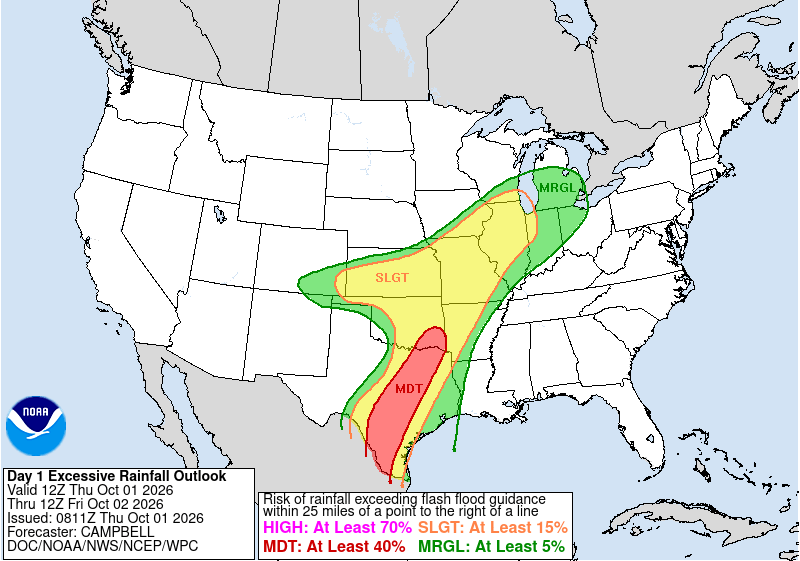
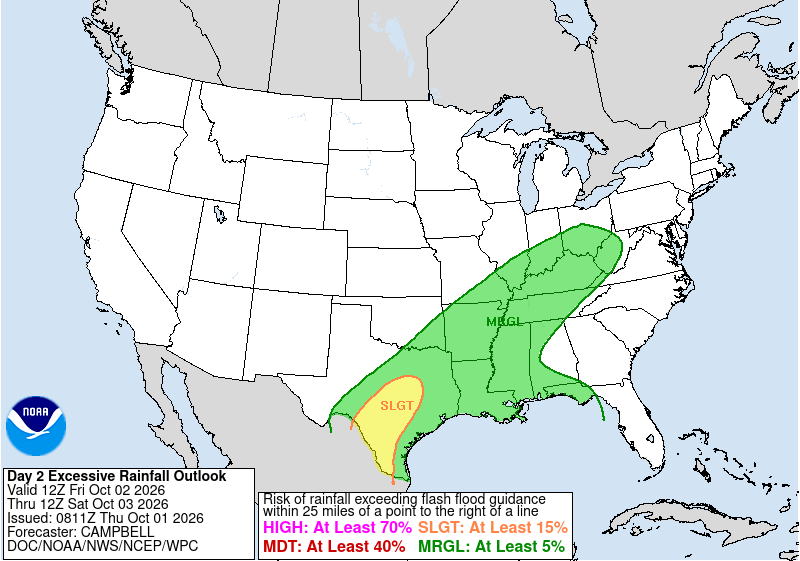
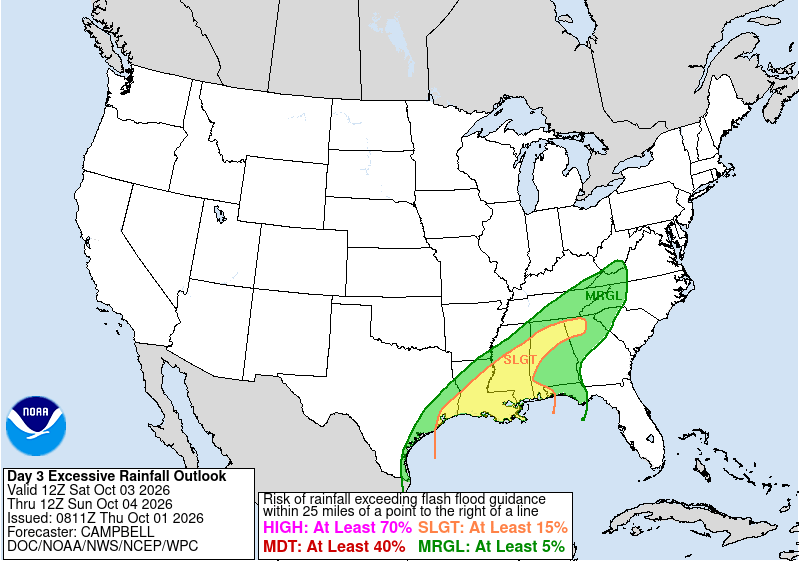
NOAA/WPC Excessive Rainfall Outlooks — public domain. Red = Moderate (Level 3/4), yellow = Slight (Level 2/4), green = Marginal (Level 1/4).
Thursday, October 1 was the clear peak. DFW Airport received more rain that day than in all of July, August, and September combined. A second round hit Friday morning, pushing statewide outages to 12,671 by Friday afternoon before the front finally pushed through. The LCRA opened floodgates at both Starcke Dam and Wirtz Dam on the Colorado River as the Llano River crested at 12 feet. By Saturday, the system had exited Texas, and by Monday the state was looking at clear skies and highs in the mid-80s with lows in the 60s — the first real taste of fall.
Why Does Heavy Rain Cause Power Outages?
People often associate power outages with hurricanes and high winds. But flooding — especially the kind of inland flash flooding Texas experienced last week — is one of the most damaging forces the electrical grid can face. Here’s why:
Substation Flooding
Electrical substations are the critical nodes that step voltage down from transmission lines to the distribution level that serves homes and businesses. Many substations in flood-prone areas of Texas sit at or near ground level. When floodwaters reach electrical equipment, utilities must proactively de-energize substations to prevent catastrophic damage — meaning they deliberately cut power to entire neighborhoods before the water arrives. This is exactly what happened during Hurricane Harvey in 2017, when over 300,000 customers lost power in the Houston metro area.
Saturated Soil and Falling Trees
After months of drought, the first heavy rain doesn’t soak into the ground — it pools on the surface. But as rain continues over multiple days, the top layer of soil eventually saturates while deeper layers remain hard. This creates an unstable situation where tree root systems lose their grip. Trees topple onto power lines, snapping distribution poles and pulling down conductors.
This is particularly dangerous in areas with mature live oaks and pecan trees common across the I-35 corridor. A single large tree falling on a distribution line can knock out power to hundreds or thousands of customers.
Lightning and Surge Damage
The thunderstorms embedded in this system produced significant lightning across the I-35 corridor. Direct strikes to transformers, reclosers, and other distribution equipment caused immediate outages — a lightning-downed power line blacked out 600+ customers in the City of West near Waco. Even indirect strikes cause voltage surges that trip protective devices and temporarily interrupt power.
Which Texas Utilities Were Hit?
The storm’s track crossed the service territories of every major Texas utility. Here’s what each reported:
- Oncor — serves DFW, Waco, Killeen, and the I-35 corridor north of Austin. 7,500+ customers lost power across Dallas, Tarrant, Denton, and Collin counties on Thursday. Lightning downed a power line in the City of West near Waco, blacking out 600+ customers. Oncor warned that flooding delayed crew access for repairs and did not release a timeline for full Dallas/Tarrant restoration on Thursday.
- AEP Texas — serves West Texas, the Rio Grande Valley, and Corpus Christi. Outages surged to nearly 5,800 customers Friday morning as the storm system pushed through overnight — the largest single-utility jump during the event.
- El Paso Electric — hit earliest and hardest. 18,000 customers lost power Monday after storm-downed lines in Vinton. Service was largely restored by Wednesday morning, with fewer than 200 remaining out.
- CPS Energy — San Antonio’s municipal utility reported 800 customers out across 41 weather-related outages Thursday afternoon, concentrated on the Northwest and far North sides. A man was rescued from a submerged truck at I-35 and Seguin Road near Salado Creek that evening. CPS had been on heightened alert after an August storm left 353,000 without power.
- CenterPoint Energy — serves the Houston metro. Peaked at 1,350+ customers out Friday. Houston was on the lighter end of this system, though western Harris County and southwestern Montgomery County received 6–8 inches.
- Xcel Energy — serves the Panhandle including Amarillo. 1,000+ customers lost power in Potter and Randall counties Tuesday during tornado-warned storms. Crews worked through the night to restore service.
ERCOT Grid: How the Bulk System Held Up
The silver lining of this storm was its timing. Unlike the June tropical storm threat when air conditioning demand was near its summer peak, this system arrived with a significant cooldown. Temperatures along the I-35 corridor dropped from the mid-90s into the 80s, with overnight lows falling into the upper 60s by the weekend.
Lower temperatures meant lower electricity demand, which gave ERCOT (the Electric Reliability Council of Texas) ample operating margin. The bulk transmission grid held up well — there were no systemwide reliability concerns at any point during the week-long event. No conservation appeals, no emergency alerts, no grid-level stress.
All of the outages were distribution-level events — downed power lines, flooded substations, lightning-damaged transformers — handled by individual utilities rather than the grid operator. This is a meaningful distinction for customers: the grid itself wasn’t at risk, but your neighborhood power line still was.
What to Do Now: Recovery & Next-Time Checklist
If Your Property Was Affected
- Document damage before cleanup. Photograph and video everything — exterior entry points first, then interior water damage. Insurance coverage often depends on documenting the cause.
- Report storm damage to the state. Texas residents can use the Individual State of Texas Assessment Tool (iSTAT) to report property damage. This helps emergency management identify areas that may qualify for assistance.
- Be cautious with floodwater. Fort Worth reported two sanitary sewer overflows during the storm (1,000+ gallons/minute at one site). Floodwater can contain sewage, chemicals, and debris. Avoid downed power lines and standing water near electrical equipment.
- Check for electrical hazards. If water reached electrical outlets, submerged cords, or entered your breaker panel, do not enter the area. Call an electrician before restoring power. If you hear sparks, buzzing, or popping, evacuate immediately.
- Stay away from rivers and dams. The LCRA opened floodgates on Starcke and Wirtz dams. Even after rain stops, river levels can rise suddenly from upstream runoff.
For the Next Event: What This Week Taught Us
- Know your utility’s outage process. Most Texas utilities accept outage reports via text, app, or website. Have your account number stored in your phone — it speeds restoration. Track outages on our live outage tracker.
- Charge everything before the storm. Phones, laptops, tablets, portable battery packs. If you own a portable power station, charge it to 100%.
- Unplug sensitive electronics. Lightning-driven surges during storm restoration destroyed equipment across DFW. Use surge protectors or unplug entirely.
- Fill your gas tank early. Gas stations need electricity to operate pumps. Don’t wait until an outage hits your area.
- Test your generator ahead of time. And never run one indoors, in a garage, or near windows. Carbon monoxide poisoning kills more people during outages than the storms themselves.
- Stock 72 hours of supplies. Water, food, medications. If you rely on a well pump, fill containers while you have power.
- Never drive through floodwater. Most flood deaths in Texas happen in vehicles. It takes just 12 inches of moving water to sweep a car away. Turn around, don’t drown.
The Bigger Picture: Drought-to-Flood Whiplash
This event was a textbook example of what meteorologists call “drought-to-flood whiplash” — a rapid transition from extremely dry conditions to heavy rainfall that turns what would normally be a manageable rain event into a flood disaster. Before this week, 92% of Texas was in at least moderate drought and the South’s drought footprint had expanded for 9 straight weeks.
Texas has a long history of remnant Pacific hurricane events producing catastrophic flooding. The 2018 remnants of Hurricane Sergio, the 2013 remnants of Tropical Storm Ingrid, and multiple other events have followed similar patterns: a Pacific storm crashes into Baja or western Mexico, its moisture gets captured by a trough, and the resulting rainfall hammers Central Texas.
For electricity customers, the lesson is straightforward: flooding is one of the most disruptive forces the Texas grid faces, and it doesn’t require a direct hurricane hit to cause widespread outages. Substation flooding, tree falls, and lightning damage from “just rain” can leave thousands without power for days.
Looking Ahead
Hurricane Polo’s remnants are gone and Texas is drying out, but the 2026 Atlantic and Pacific hurricane seasons still have weeks to go. If you live in a deregulated area of Texas and this week reminded you that your electricity plan is overdue for a review, now is a good time to compare rates while the weather is calm. And you can always monitor grid conditions in real time on our Power Outage Tracker, which covers every major Texas utility.